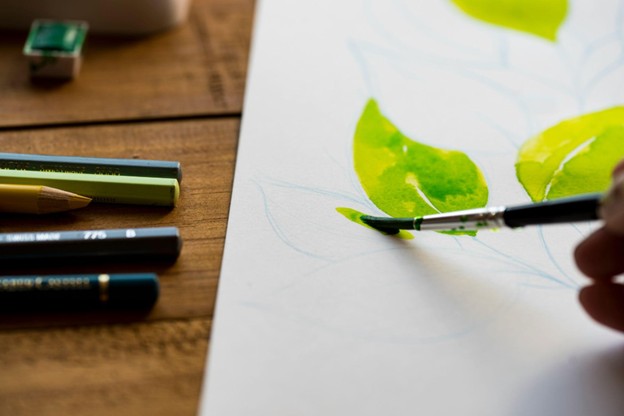
Does your mind ever feel overloaded with thoughts about an upcoming test, a project deadline, or navigating friendships? In our fast-paced world, finding a moment of quiet focus can feel impossible. At Bright Mind, we believe in empowering youth with tools to navigate these challenges by building core values for lifelong success. What if you could learn to think more clearly and creatively, understand others better, and make healthier choices for your well-being, all through a simple, engaging art practice? This is where mindful art meets our core mission.
The Art of Being Present
Before we can understand the perspectives of others (empathy), we must first be able to understand ourselves. Mindfulness is the practice of being fully aware of the present moment without judgment. Art is a natural pathway to achieving this state. Think about the sensory experience of creating: the glide of a pen on paper, the smell of crayons, the sight of colors blending. The colors, textures, and sounds pull us into the moment. It’s a gentle anchor that grounds you in the “now,” allowing you to observe your own thoughts and feelings without judgment. This practice is the first step toward developing the empathy needed to respect and understand diverse perspectives within our community.
The Science Behind the Calm
It’s not just a feeling; the link between art and calm is backed by science. Engaging in artistic activities can lower levels of cortisol, the body’s primary stress hormone. For instance, a 2016 study published in the Art Therapy journal found that after just 45 minutes of creative activity, 75% of participants had lower cortisol levels, regardless of previous artistic experience.
“But I’m Not an Artist!”
This is the most common hesitation, and it’s the biggest hurdle to overcome. Many of us believe that to create art, you need skill, training, or a masterpiece worthy idea. The truth is, mindful art has nothing to do with the final product. The goal isn’t to create a gallery worthy painting, the goal is simply to create.
As art therapist Amy Maricle says, “You don’t need any previous training to meditate through art, just a willingness to draw like a child, with freedom and a sense of curiosity“. So, let go of the pressure to be “good” at it. Give yourself permission to be a beginner, to be messy, and to simply explore.
How to Create Your Mindful Art Ritual
To get the most out of your practice, it helps to create a small ritual. This signals to your brain that it’s time to slow down.
- Designate a Space: Find a quiet spot where you won’t be easily disturbed. Keep your basic supplies (paper, pens, colors) in a small box so they are always ready.
- Set an Intention: Before you begin, take a deep breath. You might set a simple intention, such as, “For the next ten minutes, I will focus only on my creativity.”
- Embrace the Imperfect: Remind yourself that this is about the process, not the outcome. If you find your inner critic showing up, simply acknowledge it and gently guide your focus back to the sensations of creating.
- Start Small: You don’t need hours. Start with just five or ten minutes. The consistency of the practice is more important than the duration.
Five Simple Ways to Start Your Practice Today
Ready to give it a try? You don’t need a fancy studio. All you need is a few minutes and some basic materials like a pen and paper.
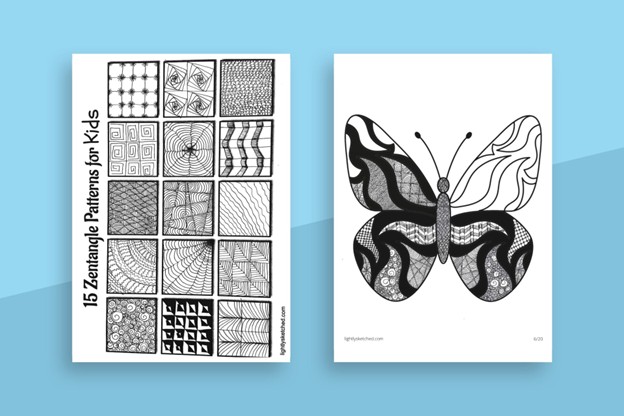
- Repetitive Patterns (Zentangle): Grab a pen and a small piece of paper. Start by drawing a simple, repetitive pattern. It could be circles, wavy lines, straight hatches, or squares. Focus entirely on the motion of your hand and the line appearing on the paper. When your mind wanders (and it will!), gently guide it back to the sensation of the pen moving across the page.
[Image Credit :Lightly Sketched Page]
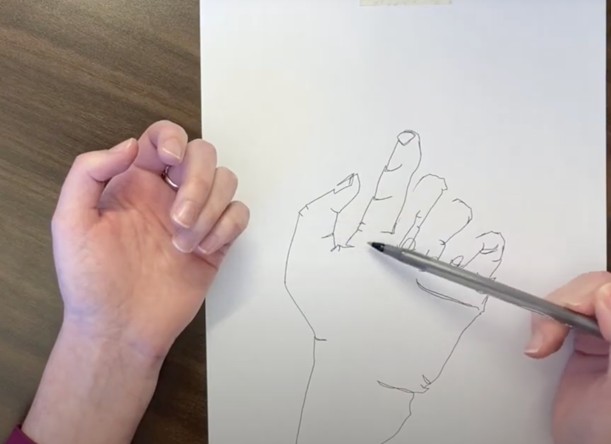
- Contour Hand Drawing: Place your non-dominant hand in a relaxed position in front of you. With your dominant hand, pick up a pen and draw the outline of your hand without looking down at the paper. Go slowly. Trace every curve, wrinkle, and line you see. The goal is not to create a perfect replica, but to truly see your own hand as if for the first time.
[Image Credit : Contour Drawing]
- Mindful Coloring: Find a simple coloring page (mandalas work great for this) or just draw a large, abstract shape on a piece of paper. Choose a few colors that appeal to you. As you color, pay attention to the sound the crayon or marker makes on the paper. Notice the texture. Watch as the color fills the empty space.
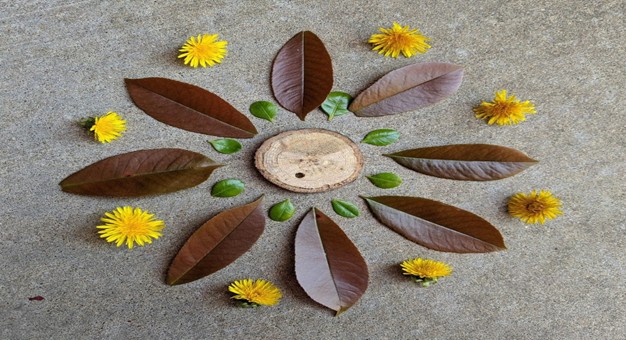
- Nature Mandala: Go outside and gather natural items that catch your eye leaves, pebbles, flower petals, twigs, or acorns. Find a quiet spot and arrange your collected treasures into a circular, symmetrical pattern. Focus on the textures, smells, and colors as you place each item. The beauty of this practice is its impermanence when you are done, simply leave the mandala to be reclaimed by nature.
[Image Credit : Crystal Bridges Page]
- Draw Your Breath: Take a piece of paper and a pen or marker. As you take a long, slow inhale, draw an upward line or a curve. As you exhale, draw a downward line or a corresponding curve, without lifting the pen from the paper. Continue this for several breaths, allowing a single, continuous line to trace the rhythm of your breathing on the page.

[Image Credit : Calm Blog]
The power of these exercises is in their simplicity. They occupy your mind just enough to stop it from racing, allowing you to settle into a state of calm focus. The goal is to let go of expectations and immerse yourself in the physical sensations of creating. The final product is just a souvenir of the quiet moment you carved out for yourself.
By using these simple art tools, you are not just having fun, you are actively building on the Bright Mind Core Values. You are developing the critical thinking, empathy, and healthy habits needed to thrive. The next time you feel overwhelmed, try reaching for a pen. You are taking a powerful step toward a more mindful, healthy, and empowered life.
References
- 10 Mindful Art Practices You Can Do at Home
- 20 Mindfulness art activities
- A Beginner’s Guide to Mindful Journaling With Art
- Art & Mindfulness
- Cigna’s Take on art therapy